

Moving Out After a Flood, Fire or Burst Pipe: What to Do First
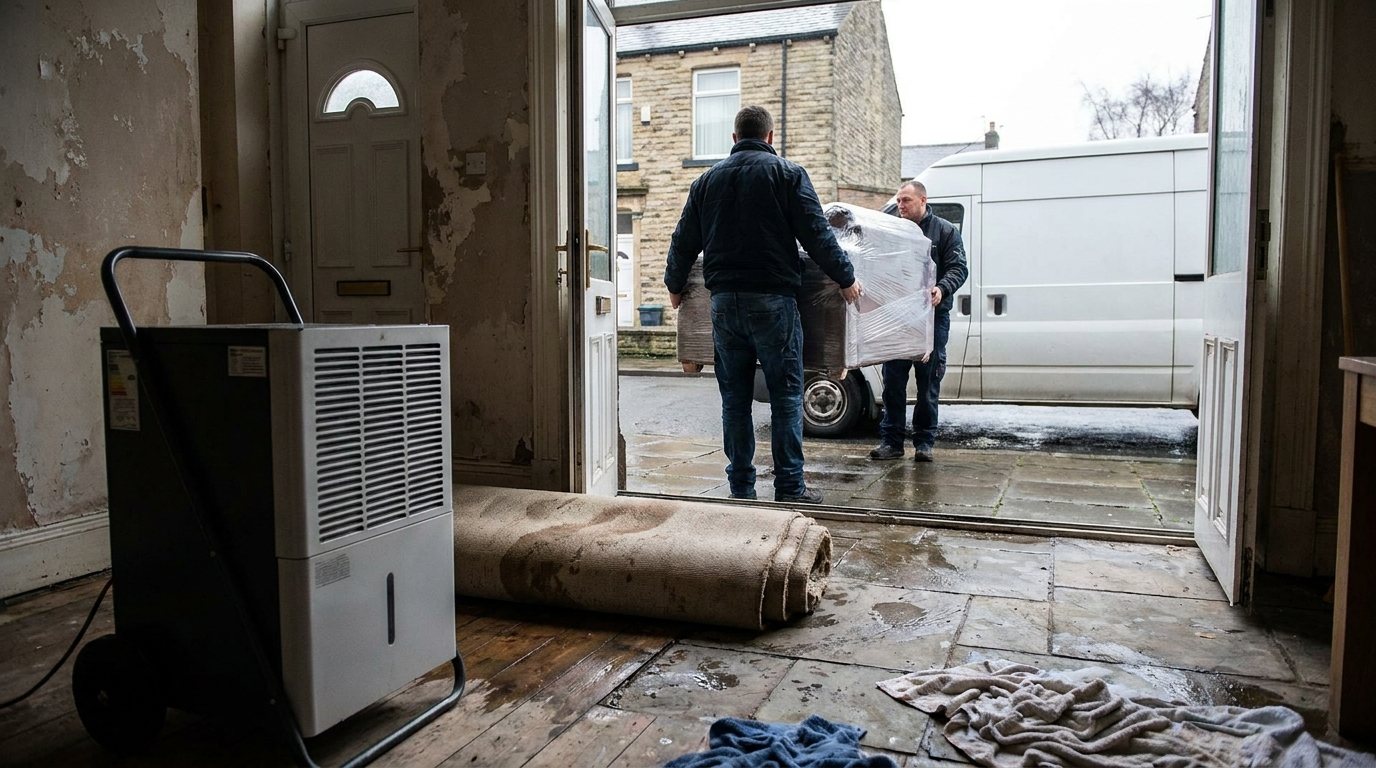
Few things are more unsettling than discovering your home is no longer safe to live in. A burst pipe in the loft, a kitchen fire or water coming in during heavy rain can all leave you needing to get belongings out quickly, often while still in shock. Knowing the right order of things to do makes a difficult situation more manageable, and helps protect what can still be saved.
Safety comes before belongings
Do not go back into a property until it is safe. After a fire, the fire service will advise whether you can enter. After a flood or major leak, electricity and water may need to be switched off, and ceilings that have taken on water can be heavier and weaker than they look. If you are unsure, wait for advice from the relevant service, your landlord or a qualified tradesperson.
When you are allowed back in, wear sturdy footwear and gloves, and avoid touching anything electrical that has been wet.
Speak to your insurer or landlord early
Before moving or throwing anything away, contact your home insurer, and your landlord if you rent. They may want to see the damage, or ask for photographs, before items are removed. Take pictures and video of every room, including damaged belongings, the source of the damage and any water lines on walls. Keep receipts for anything you have to spend money on, from storage to temporary accommodation.
Ask what they expect you to do about belongings and whether they need anything kept for inspection. Getting this clear at the start avoids problems later.
Decide what to move, and in what order
Irreplaceable items first
Start with documents, photographs, medication, keepsakes, laptops and anything that cannot be replaced. Put them in sealed boxes or bags and take them somewhere dry and secure, such as a relative’s home.
Then items that can be saved
Furniture and belongings that are dry or only lightly affected should come out next, before damp or smoke odour spreads further. Wet items should not be packed tightly into closed boxes, where they can quickly develop mould. Separate them and let them dry, or ask your insurer for advice on specialist cleaning.
Leave clearly ruined items for assessment
Badly damaged furniture and carpets may need to stay put until the insurer or landlord has seen them. Once they agree, they can be cleared and disposed of properly.
Where your belongings will go
Think about where things will go before they leave the house. If you are staying with family or in temporary accommodation, there may be space for only the essentials. Everything else will need somewhere dry to wait until repairs are finished or you find a new home. Label boxes clearly and keep a simple list of what went where; when you are juggling builders, insurers and a new address, that list becomes invaluable.
Getting help at short notice
Moving belongings in a hurry is hard work, especially when you are dealing with everything else. A removals firm can bring a van, materials and extra hands, and take on clearance of damaged items once you have the go-ahead. In Bradford, The Transporter Co is one local option: the family-run firm says they are available at short notice, and its services include house removals, packing, same-day clearances and waste removal, with removed waste taken to a trusted local recycling point. For anyone who needs emergency removals in Bradford, it is worth explaining the situation in full on the first call, including what has been damaged and where belongings need to go, so the right van and team can be arranged.
Looking after yourself
A sudden move after damage to your home is stressful, and it is easy to try to do everything at once. Accept offers of help from friends and neighbours, keep a notebook of calls and reference numbers, and take breaks. The belongings that matter most will already be safe if you dealt with them first.
Nobody plans for a flood, fire or burst pipe, but a calm sequence of steps, safety, records, irreplaceable items, then everything else, gives you the best chance of protecting your belongings and getting back on your feet.