

Moving Antiques, Artwork and Valuables: Wrapping, Handling and Cover
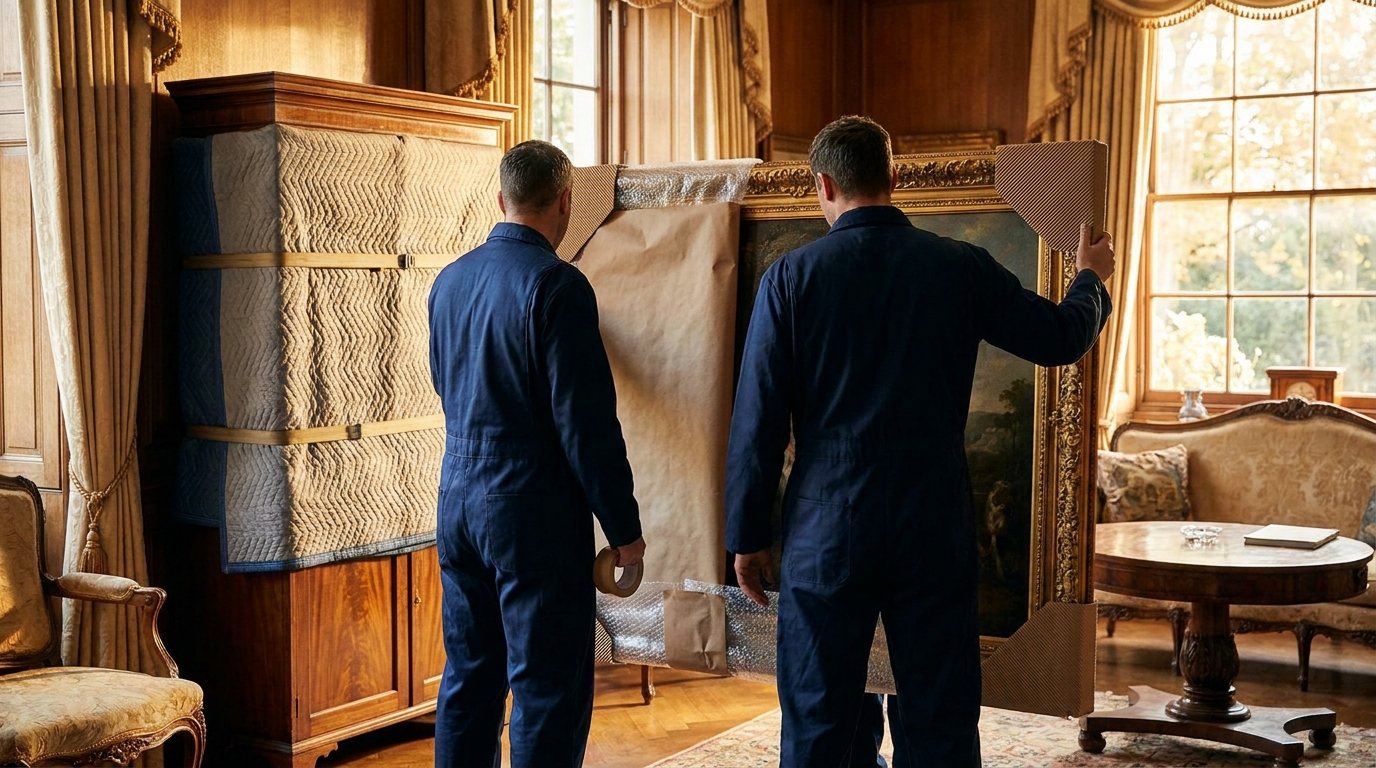
Most households own at least a few things that matter far more than their size suggests: a grandfather clock, a painting, a cabinet passed down through the family, a collection built up over decades. These are the items people worry about most on moving day, and with good reason. Moving them safely depends on three things: how they are wrapped, how they are handled and whether the right cover is in place before anything leaves the house.
Make a list of what needs special treatment
Walk through your home and note every item that is fragile, valuable, irreplaceable or simply awkward. Include antique furniture, mirrors, framed pictures, sculpture, ceramics and glass, clocks, musical instruments and jewellery. Photograph each one, recording any existing marks or wear, and keep receipts or valuations together if you have them.
This record is useful in two ways. It helps the people moving your belongings understand what needs extra care, and it gives you clear evidence of condition should anything go wrong.
Wrapping that suits the object
Different pieces need different protection. Generic bubble wrap is not always the answer, and on some surfaces it can do harm.
- Polished antique furniture benefits from soft wrapping first, then padded blankets, so nothing rough sits against old finishes.
- Paintings and framed works should be protected at the corners and travel upright, with glazed pictures given extra support.
- Mirrors and glass need rigid protection as well as padding, and should never be laid flat under other items.
- Ceramics and small collectables are best wrapped individually and packed snugly in strong boxes so nothing shifts.
Doors, drawers and loose parts on furniture should be secured or removed so they cannot swing open or rattle in transit.
Handling on the day
Most damage happens during lifting and carrying rather than on the road. Heavy antiques should be lifted by their strongest structural parts, never by arms, handles or carved details. Clear routes through the house before valuable items are moved, and make sure there are enough people to carry each piece without rushing.
Inside the vehicle, valuable items need to be properly secured so they cannot slide or tip. Removal vans equipped with blankets, straps and securing systems make a real difference here.
Check your cover before moving day
Insurance is the part people most often leave until it is too late. Before the move, find out what your removal company’s cover includes and how it applies to high-value items. Ask whether particular pieces need to be declared individually, whether items you pack yourself are treated differently, and what the process is if something is damaged.
It is also worth checking your own home contents policy, as some policies extend to belongings in transit and others do not. Having both sets of answers in writing before the day removes a great deal of uncertainty.
Choosing a remover for valuable belongings
In Shropshire, Jays Removals & Storage is one example of a firm that lists antiques and collectables, mirrors, artwork and high-value possessions among the items it moves, with special care for fragile and valuable pieces. Its uniformed, trained team works from vehicles fitted with protective blankets, straps and securing systems, and the company describes its removals as fully insured. It also offers fragile-item packing as part of its full and partial packing services.
When looking for a fully insured removals company in Shrewsbury or elsewhere in the county, ask direct questions: how will each valuable item be wrapped, who will carry it, how will it be secured, and what does the cover include? A good remover will welcome the conversation.
Consider storage for the most precious pieces
If your new home is not ready, or rooms are being decorated, keeping valuable items in clean, dry, secure storage can be safer than leaving them among building work and boxes. Bring them in last, once the rooms they belong in are finished.
Precious belongings deserve a little more planning than the rest of the house. With careful records, appropriate wrapping, unhurried handling and cover confirmed in advance, they can arrive at your new home in exactly the condition they left.