

Making a Garage Home Office Warm Enough to Work In
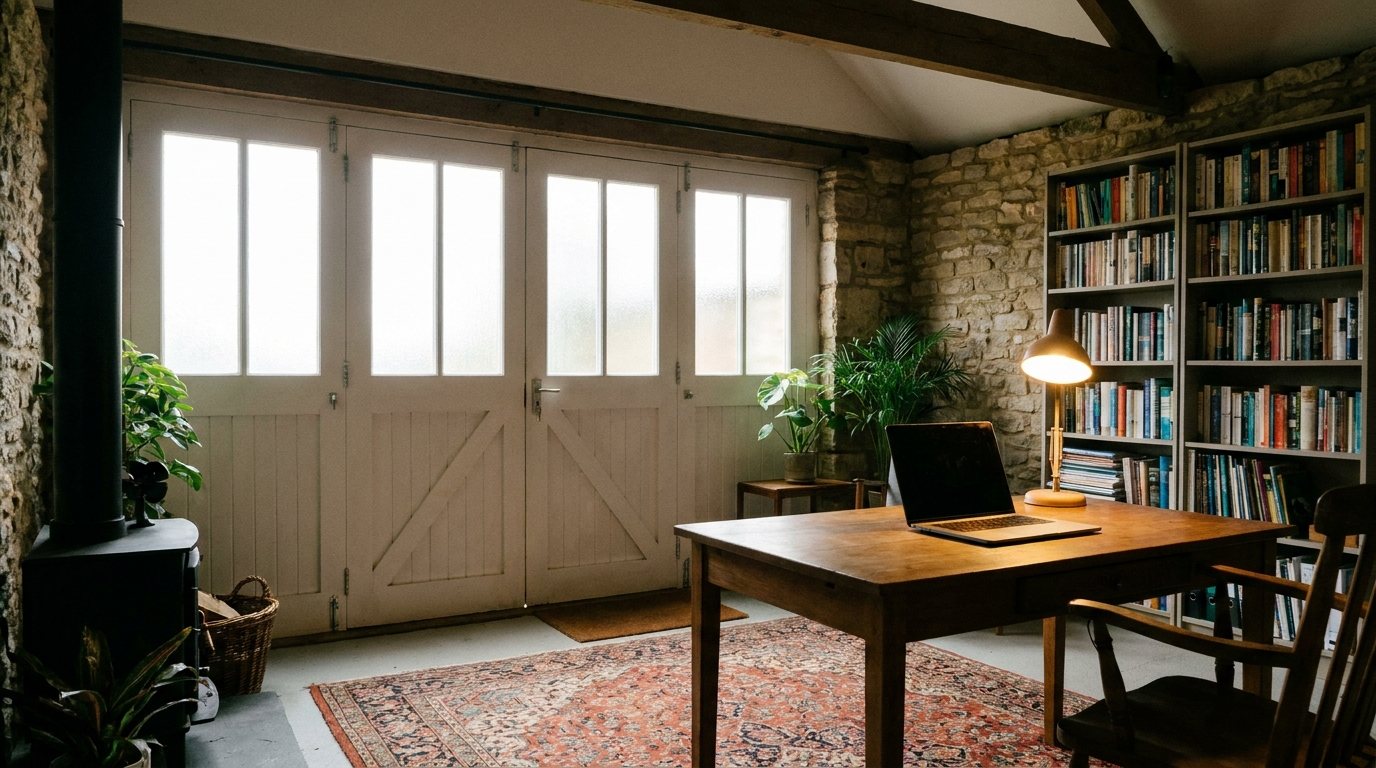
For many people, the garage is the reason they chose their new house. It promises a place to work away from the kitchen table, a quiet room for calls and a door to close at the end of the day. Then the first cold morning arrives, and the dream office feels more like a draughty shed. The good news is that a garage can become a comfortable workspace, but it takes more than a desk and a heater.
Start with what the garage is used for now
After a move, the garage tends to fill up with everything that didn’t have an obvious home: half-unpacked boxes, garden tools, spare chairs. Before planning an office, decide where those things will live instead. A loft, a shed or a few weeks in self storage can clear the space so you can see the room properly.
Then check the basics. Is there a damp-proof course? Is the floor level? Does the roof leak? Is there power, and is it safe for a computer and heating? A survey from your purchase may already answer some of these questions.
Why the door is usually the weakest point
Walls and roofs can be insulated, but the garage door is often a thin sheet of metal or a single layer of old boards with gaps round the edges. Even in a well-insulated room, a poor door lets heat escape and noise and draughts in. It also tends to be the largest single surface facing the outside.
Some people brick up the opening entirely. That is a bigger building job, can affect planning, and removes the option of using the garage for a car or bulky storage later. Keeping a door, but a much better one, is often the more flexible route.
What to look for in an insulated door
- Insulated panels: a thicker, insulated core slows heat loss and damps outside noise.
- Seals and cills: perimeter seals close the gaps where most draughts get in.
- Glazing: obscure double glazing admits daylight while keeping your desk private from the street.
- A matching finish inside: a door that looks good from inside makes the room feel like part of the house rather than a garage.
A timber option for garage conversions
A34 Timber Gates & Garage Doors, a family-run maker in Penkridge, Staffordshire, makes insulated garage doors with exactly this kind of use in mind. Its ECOtherm doors use 60mm thick insulated panels, with seals, cills and obscure double-glazed units to trap warmth and reduce noise. They are double-boarded, so they look the same inside and out, and are available in softwood or Accoya timber.
The company’s own guidance makes a fair point: a good door is only part of the job. For a garage that will be used every day, the walls, roof, ventilation and heating all need attention too.
Finishing the room
Ventilation
A sealed room with a person, a computer and a heater in it can quickly become stuffy or damp. Plan for fresh air, whether that is a window, a vent or a door you can open on mild days.
Heating and lighting
Choose heating suited to an insulated room and add plenty of task lighting, as garages often have a single bulb in the centre.
Regulations
Depending on the work, a full conversion may need building regulations approval or planning permission. Check with your local council or the Planning Portal before you start rather than afterwards.
Keeping flexibility for the future
One advantage of keeping working doors is that the space can change with your life. A home office today can become a workshop, a gym or a garage again if you move job or sell the house. Buyers often appreciate that flexibility too.
A warm, quiet garage office can transform working from home in a new house. Clear the space, deal with damp and power, and give the door the attention it deserves, and the room you were excited about on viewing day will become one you genuinely enjoy using.